
03 / Community
Kaikasan Community
What happens when designers show up for each other.
01
Role
Volunteer Contributer
02
Duration
2024 — Ongoing
03
Community
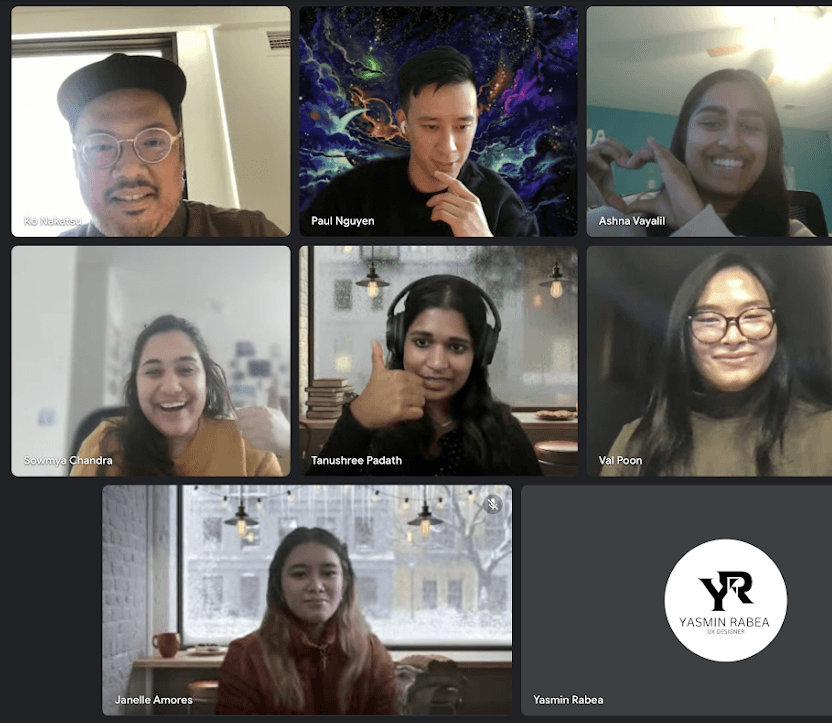
Kaikasen, founded by Ko Nakatsu
"Ko had one rule. You have to teach each other. I didn't know it yet, but that one rule would change how I design."
01 / HOW IT STARTED
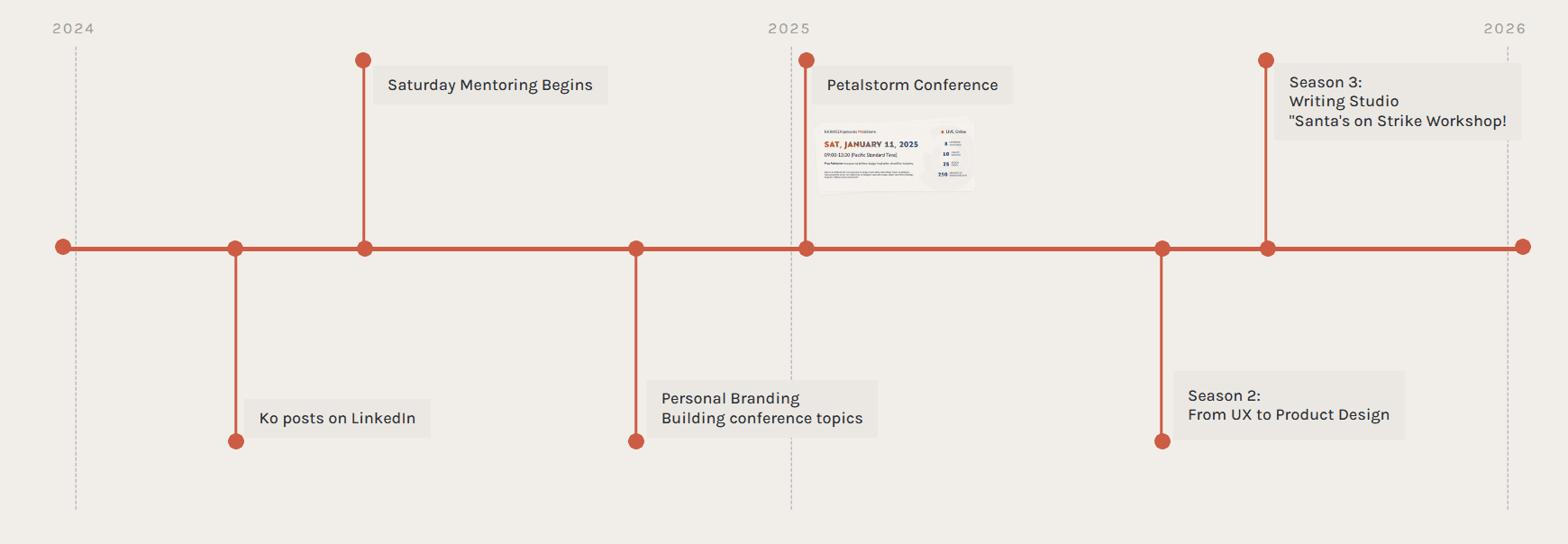
A LinkedIn post. A Google form. Saturday Commitments
In 2024, Ko Nakatsu — a Design Lead at Salesforce (Now Microsoft) — posted that he was looking for designers to mentor. An experiment, he called it. No cost. No certificate. No guarantee of anything.
I filled out the form. I showed up the first Saturday. I
Kaikasen is Ko's creation — his vision, his one rule, his willingness to give knowledge away every week. I want to be clear about that. What I can speak to is what it felt like to be inside it, and what I chose to contribute once I was there.
02 / THE CULTURE
Nobody was obligated. Everyone who stayed, chose to.
Early on, people dropped off. It was voluntary, after all. But a curious, opinionated core group remained, and I was one of them.
Something unexpected happened. Missing a Saturday started to feel wrong. Not because of a rule. Because something real was happening and you weren't there for it. The accountability wasn't enforced. It grew from people who cared for design.
That's when I started noticing something I hadn't been able to name before: that the conditions for learning don't emerge naturally. Someone designs them, deliberately or not. Ko had designed these without making them feel designed. The Saturday ritual. The one rule. The expectation that you'd eventually stop being a student and become a teacher.
I filed that away. And I kept showing up.
03 / SEASON ONE
Confidence first. Everything else after.
The first season was about foundations — branding, storytelling, presentation skills. Ko would present. We'd ask questions. We'd have homework. The kind that asked you to look inward:
find an artwork that represents your brand.
Write about a design decision you regret.
Pick a meaningful object, and ask yourself "WHY" 5 times to uncover the connecting value.
The community found its shape in Season One. Not through structure, but through repetition. The same people, every Saturday, getting a little less afraid of being wrong in front of each other.
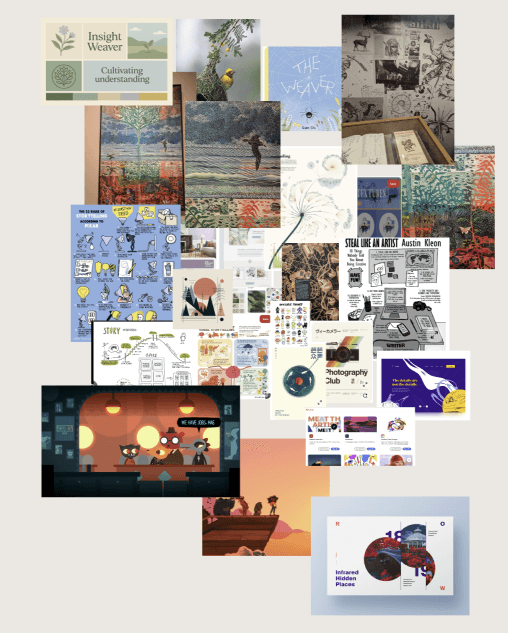
A brand is not what you like, or what you’re drawn to. It’s who you want to be perceived as.
Quote by Ko, Microsoft
Prompt: Choose a meaningful Object, find out why it's important to you by asking "WHY" 5 times.
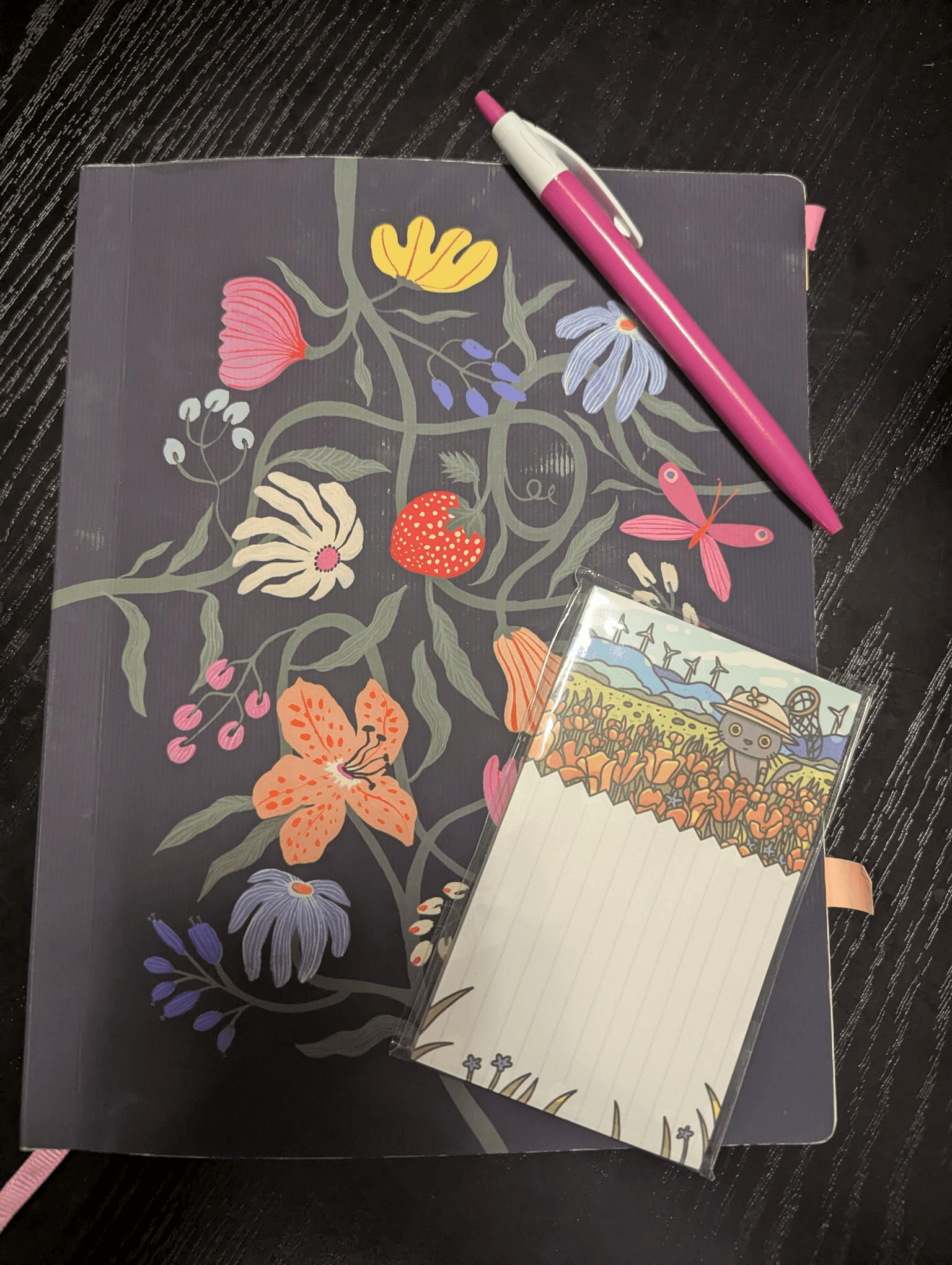
05 /Fifth
Because I'm a visualizer and a systems thinker. I don't trust a solution I haven't been able to see first. That instinct shows up in everything I design.
04 / PETALSTORM
Giving the community a voice.
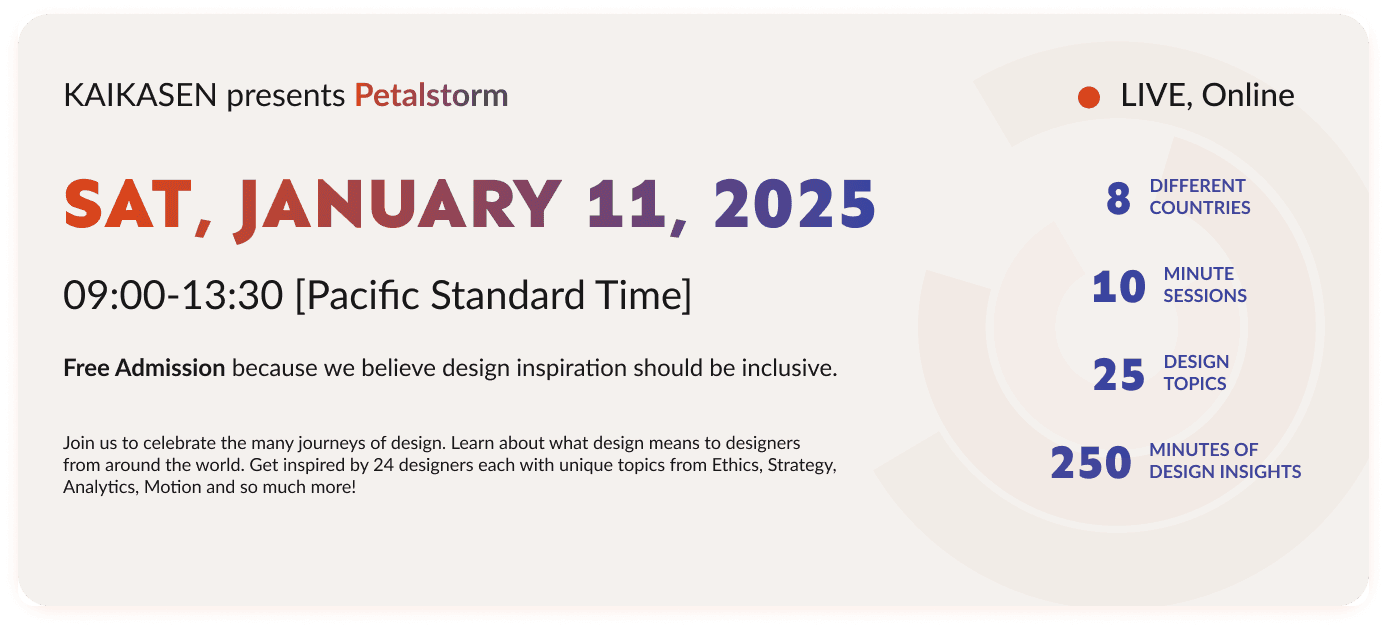
We built "Petalstorm" — a design conference made entirely of ten-minute lightning talks. Short enough that nobody could hide behind complexity. Long enough to say something real.
The format proved Ko's rule at scale. Everyone has something worth teaching. The mandatory survey before presenting forced reflection. Practice sessions meant you'd already been wrong in private before you had to be right in public.
Mandatory
survey
Continuous
Peer feedback
Unique
presentation Topics
Maximum
10 minutes
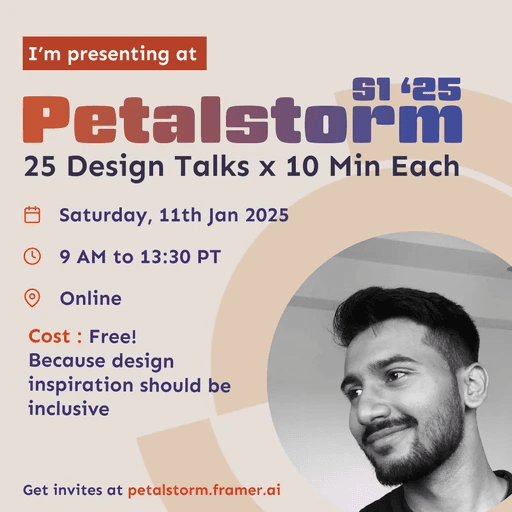
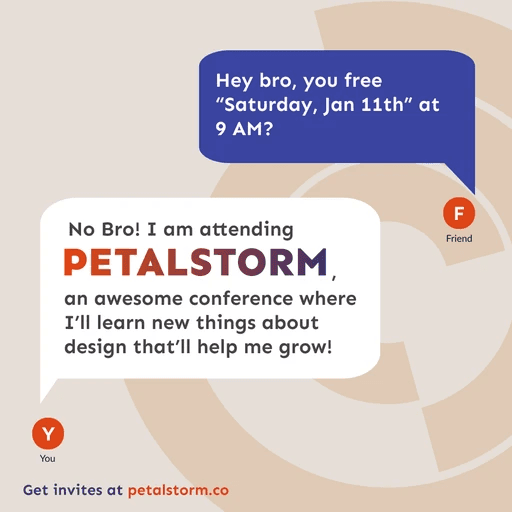
My contribution was helping with the website and the social media outreach materials — building the public face of something the whole group had made together. The design problem was specific: the visual language had to feel credible enough to invite strangers in, and warm enough to reflect what Kaikasen actually was. Not a polished institution. A community of people who loved design and showed up for each other.
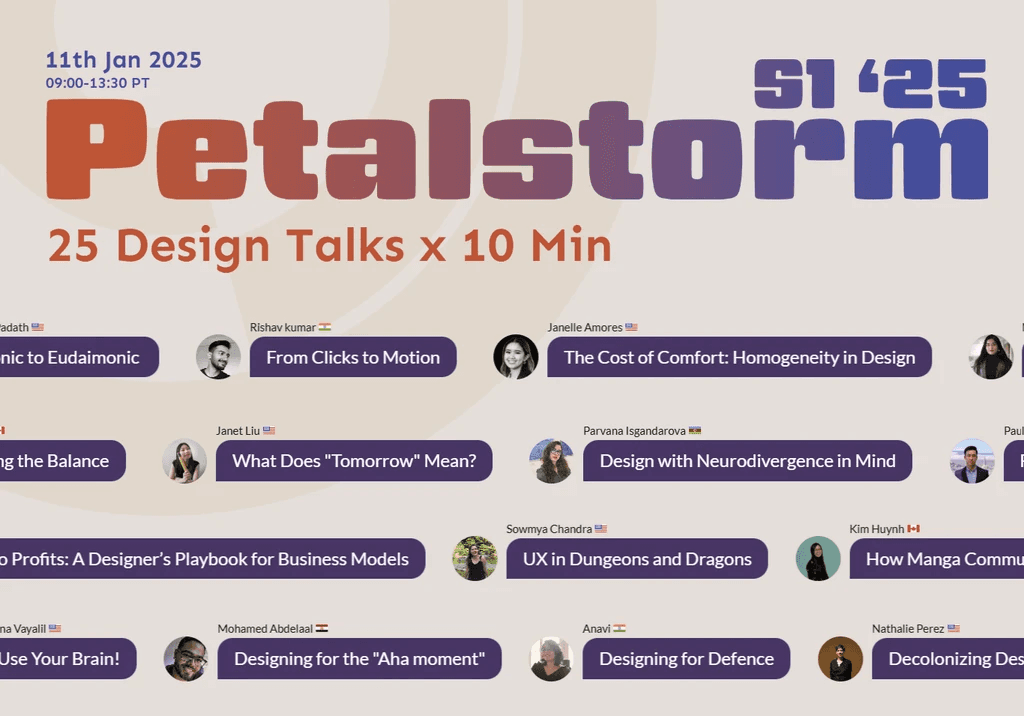
Social Media Materials - Posted via LinkedIn.
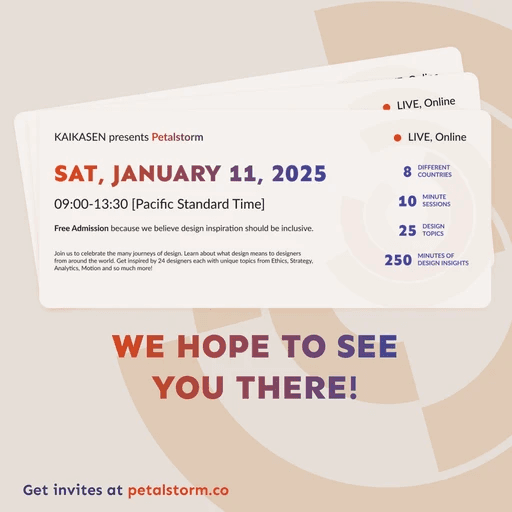
Impact Metrics
Launched in January 2025, the "Petalstorm website" became a central hub for showcasing key projects and inviting deeper engagement.
05 / My topics
What I chose to talk about.
Ko's rule eventually caught up with me. So I gave two talks — not because I had answers, but because I had questions I was working through out loud.
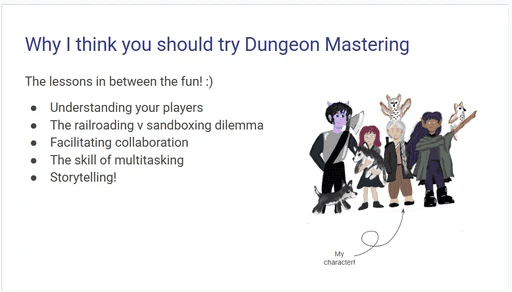
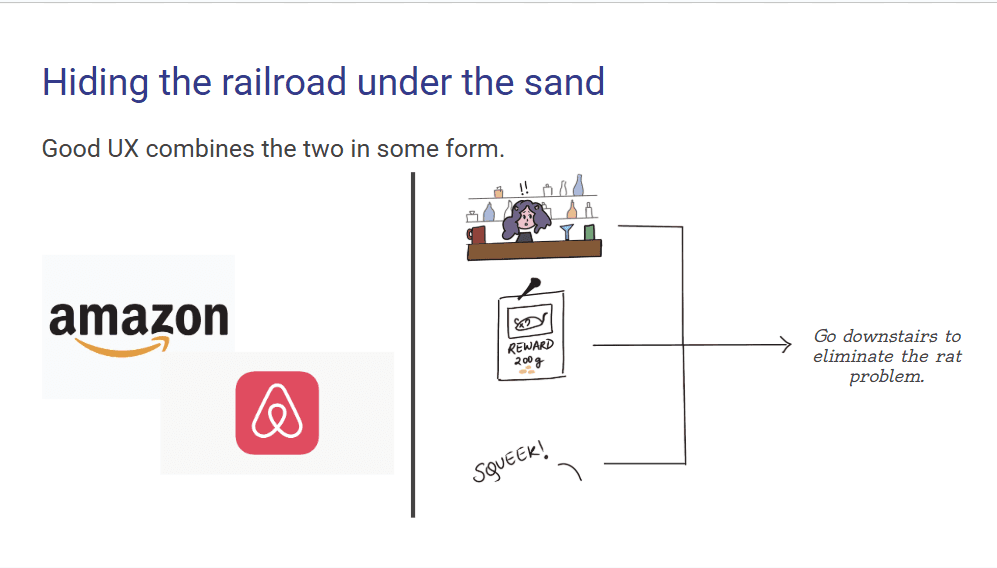
TALK 01 — What Every Designer Can Learn from Being a Dungeon Master
A Dungeon Master doesn't control the story. They design the conditions for a story to happen — improvising systems, managing chaos, making every participant feel like it's about them. The more I thought about it, the more it sounded like every cross-functional design project I'd ever worked on. The talk landed because the question was real. I didn't have a clean answer. I had a useful lens.
TALK 02 — Digital Hoarding: A Deep Dive
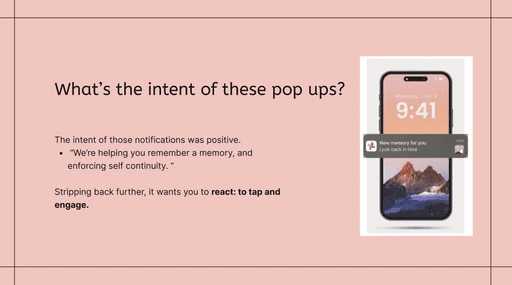
The way people accumulate and organize digital objects — files, screenshots, half-finished Figma frames, bookmarks they'll never open — reveals their mental models more honestly than almost any interview question. I wanted to understand why. What does the mess tell us? What does it mean for how we design information architecture?
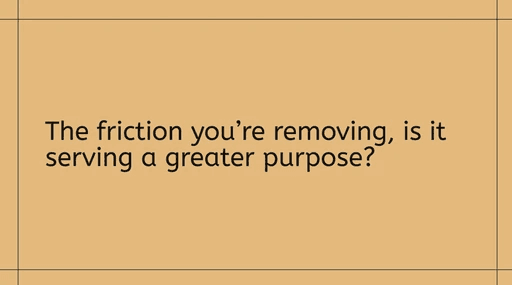
"If you have knowledge, give it away. Your brain will have the opportunity to find new knowledge"
- Quote by Ko, Microsoft
06 / THE REAL PROBLEM
Shifting from UX to Product Design
Season Two moved into strategy, product thinking, and competitive analysis. Ko pushed us further from what felt safe — away from craft questions and toward business questions.
How does design create value?
What does it mean to think like a product designer, not just a visual one?
How do we plan for the future strategically?
What are scenario planning matrixes?
We also started sharing personal stories about being future-focused in workplaces that weren't. About sitting in rooms where design was treated as decoration. About the gap between what we knew design could do and what we were being asked to do.
That friction was productive. It meant we were taking it seriously.
High user trust in AI
Low user trust in AI
Execution Focused
Systems-thinking
UX + AI
Q. What will happen to AI and UX in the next 5 years. Create a 2x2 Matrix.
07 / GOING BACK TO LOOK FORWARD
Future-focused thinking. And a writing studio.
Season Three moved into innovation, growth mindset, and long-horizon thinking. We talked about where design was going, what skills would still matter, and what it meant to stay curious in an industry that was changing fast.
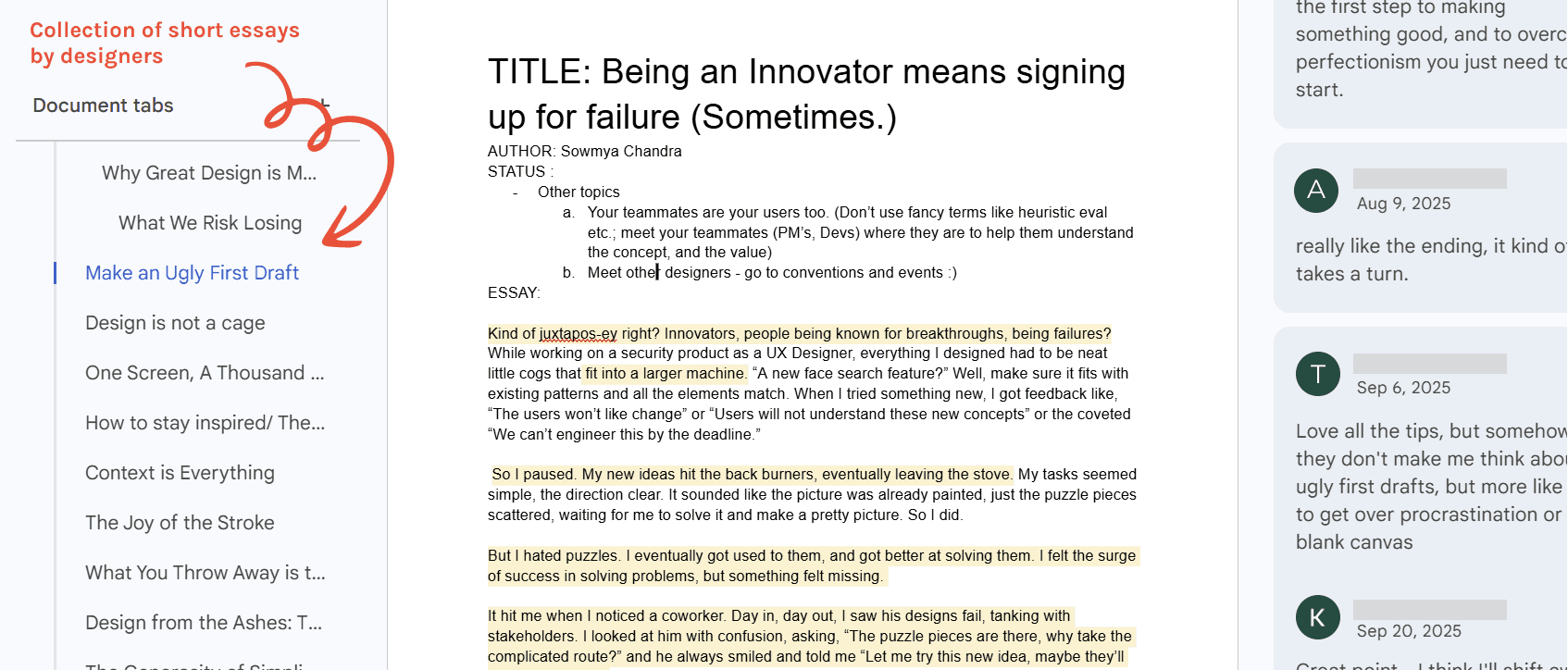
We also started a writing studio — a shared Google Doc where everyone free-wrote design advice. No rules about quality. Comments were open. People added to each other's thinking, challenged it, built on it. The goal, eventually, was a book. Whether or not that happens, the document itself became something: a record of a community figuring things out together, in writing, over time.
It was the most collaborative artifact we made. Nobody was in charge. Everyone contributed. It worked because people trusted each other enough to be unfinished in public.
08 / OUTCOME
What Santa taught me about Structure.
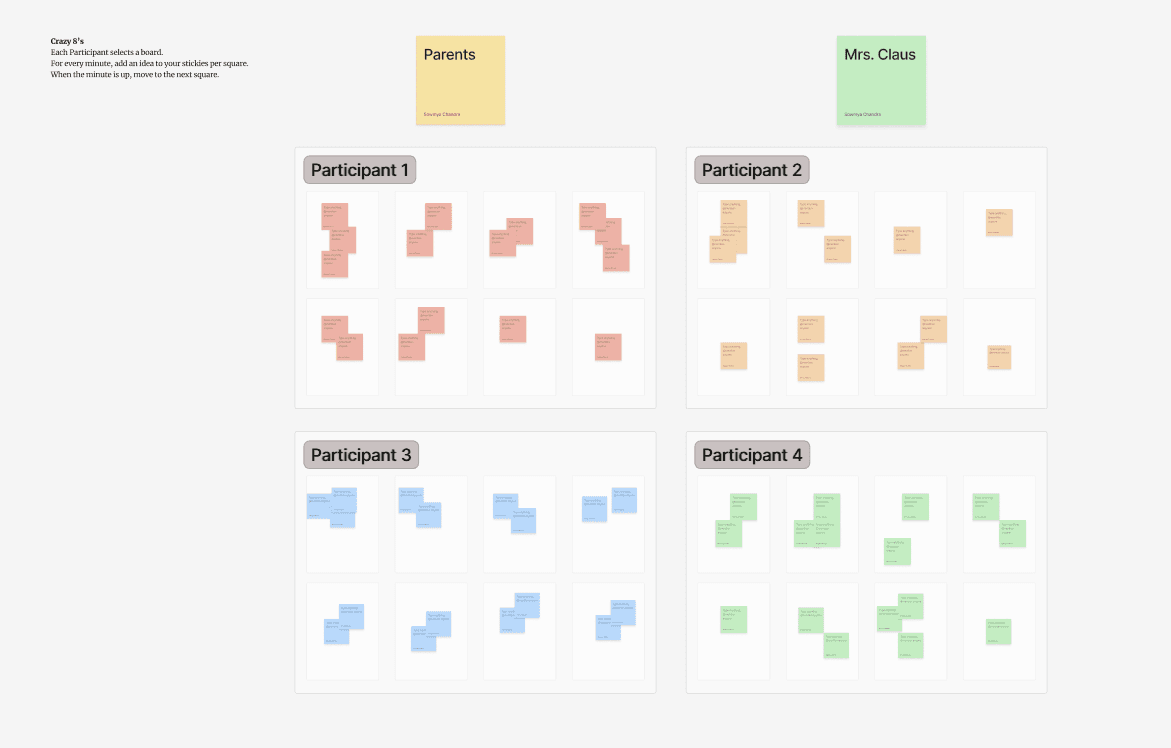
Season 3 was coming close to Christmas, and I wanted to contribute to the festivity of design. So I designed a workshop combining two design activities; Stakeholder Mapping and Crazy 8's.
The brief was absurd on purpose. Low stakes create high output.

Workshop Prompt
Its December 24th, and Santa has decided to go on strike!! Christmas operations are at a standstill, and the north pole needs a backup plan.
What did designers come up with?
When asked who was impacted the most, a lot of unexpected answers came forward. My favorites were "the Grinch", with the assumption that he would be blamed for ruining Christmas when he had no part, and Mrs. Claus, who had to deal with a good-for-nothing husband. More impactful parties included children and parents, amongst workers.
Santa's workshop became our own little eco-system of users, providers and everyone in between.


Moving into Crazy 8's, we chose two users unanimously, the parents and Mrs. Claus, and came up with 8 ideas to fix Christmas. Admittedly, my favorite ideas included:-
Mrs. Claus divorcing Santa, and becoming the new spokesperson for Christmas.
Introducing a reduce-reuse-recycle program on Christmas, giving it a new meaning.
Creating a direct messaging app between elves and parents to find if children have been naughty or nice.
Christmas becoming a new version of Mother's day!
What the workshop confirmed:
Without structure, people protect themselves. They wait. They polish before sharing. They measure the risk of being wrong against the reward of contributing, and often decide not to. With structure, that calculation changes. The constraints tell people what game they're playing.
The shared space tells them they're not alone in it.
The absurd brief tells them the stakes are low enough to be brave.
The creativity doesn't happen despite the structure. It happens because of it.
- Observed by me.
09 / LEARNINGS
Three things I'm still thinking about.
01
Design is collaborative by nature.
I knew this abstractly before Kaikasen. I know it differently now. The best work in that community — the talks, the workshop, the writing studio — didn't come from one person with a good idea. It came from conditions that made it safe for multiple people to have ideas at the same time. That's not a soft observation. It's a design constraint.
02
Structure and creativity are not opposites.
Every good constraint I've ever worked within has made me more creative, not less. The ten-minute lightning talk format. The mandatory survey. The Santa brief. The one rule. Each one removed a decision I didn't need to make, and freed up energy for the decisions that mattered. Designing good constraints is a skill. I want to keep getting better at it.
03
Conditions for learning don't happen by accident.
Ko designed Kaikasen. The Saturday ritual was a choice. None of it felt heavy because it was built around trust rather than obligation. But it was designed. I want to bring that awareness into every team I work on — asking not just what we're making, but whether the conditions we're working in are ones anyone actually designed, or ones that just happened.